Speculation and Simplification
Goings on observed in the Brussels and Westminster Bubbles

Last week I was in Brussels where the fashion is for ‘simplification’, yesterday I was in London where I was talking about the UK Budget. I hoped to post it when I got back, but it was very late and this morning I was decidedly lacking in steam. There was a third piece on cultural stuff that I hadn’t finished and I can’t right now, so that can slip to next week. Enjoy.
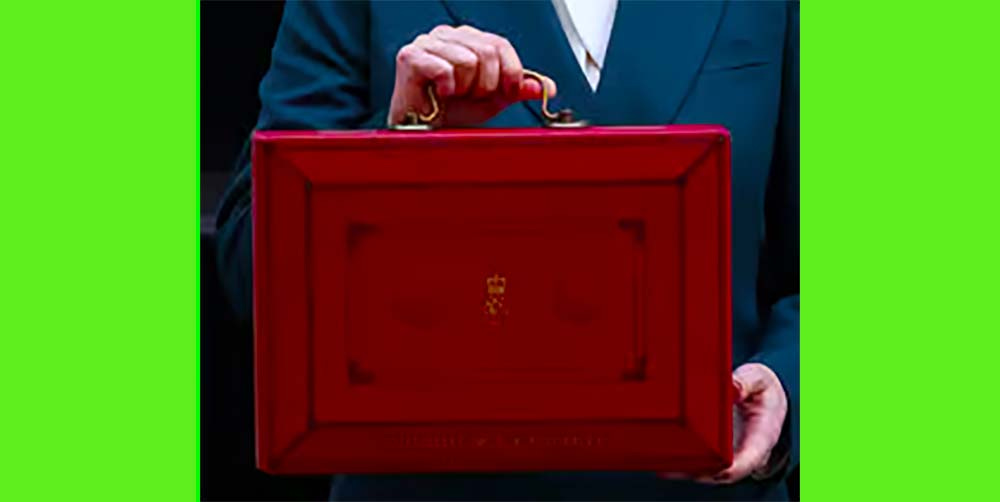
An out of date ritual and economic reality
There is something to be said for talking about the budget after the event. This is not, however, fashionable. For weeks we have been peppered by wild speculation on the content of Rachel Reeves second budget. Much of it, looking back before the more embarrassing predictions are removed from the websites of the supposedly wise, proved to be complete tosh. Rachel Reeves may not have especially helped herself at times, though I would urge interested folk to look at the words she actually used and the precise question she was asked before condemning her outright, even so, steering a more neutral course may have been prudent. Aside from that, however, what this year’s circus shows is how hopelessly outdated the Budget process has become.
Ever since the world moved through the advent of 24 hour news channels to the internet and social media the notion of a ‘Budget purdah’ and the announcement of every measure to Parliament before it went anywhere else has become less and less viable. This year the pre-Budget period came to resemble the football transfer window when stories formed from unattributable briefings and anonymous ‘sources close to something or other’ but with no basis in fact outnumber the half-decently informed. A few weeks before the budget it was almost conventional wisdom that Ms Reeves would junk Labour’s manifesto pledges not to increase the rates of corporation tax, income tax, national insurance, or VAT. It didn’t happen. I expect partly because someone with a degree of sense won the argument that for an already troubled administration the junking of an electoral promise of significance would be near fatal. If Rachel Reeves head any doubt of the political unviability of such a move herself I’ve little doubt that ‘sources close to Gordon Brown’ may well have told her so. Meanwhile journalists who had merrily been turning out stories of Budget speculation turned, without a shred of irony, to running stories describing how economically damaging such speculation could be.
So it came to pass that the second Reeves budget was somewhat different to the first. Last year the key audience was the bond/monery markets. In fact the only audiences was the markets. Not ideal ground for a Labour Chancellor but essential nonetheless. Establishing the government of one of fiscal credibility is an essential first step. It is worth remembering and there repeating frequently that with the single exception of Tony Blair’s administration, every other Labour government has been destroyed by the markets almost before it got started. It may well be that those governments were merely putting into practice their manifestos, but electoral permission does not gift immunity from adverse market reaction. So courting the financial markets is a pre-requisite for delivery by any Labour Chancellor – the rules have always different for Labour, simple as that, though if Liz Truss had any self-awareness she would protest otherwise. The second Reeves budget was a Labour budget, underpinned by a continued emphasis on stability and snapshots collected by Labour List suggest members back many of the measures heavily, with 97% approving of taxing the gambling firms, 93% in favour of reforming Council Tax bands, 82% backing the City/Tourist Tax (called for in this column in 2023),1 and 70% backing NICs on landlord income.2 The Budget even got MPs Luke Akehurst and John McDonnell on the same page - just about.3
Where this budget failed was in any attempt to create a fairer tax system by ironing out the absurdities and contradictions that have slipped into the system in years of tinkering by chancellors of differing political hues. But who know the problem don’t we. Big reforms create lots of winners and losers. They are a political gamble and neither Reeves nor Starmer are gamblers, you will note that the review of Council Tax bands avoids addressing the lower bands precisely to avoid such a problem on a broad scale.
Times remain tough, and I feel obliged to point out that were it not fair the £90 billion4 that leaving the EU is costing the exchequer Reeves job yesterday would have been a relative stroll in the park. Unfortunately, that can’t be changed any time soon, but still, a Labour budget, which in trajectory seeks to move the economy from an addiction to low wage jobs to higher wages, a broader tax base and modest but hard to avoid taxes on those most able to pay.
Simplifying the counter revolution
In 2024 I wrote about the outcome of the European Parliament Elections 5and highlighted among other things the decline of the parties of the centre left that form the Socialist and Democrat (S&D) Group and pointed out that while the group had punched above its weight in th previous mandate, may find itself considerably diminished in this parliament.
And so it is coming to pass. The largest group, the EPP/Christian Democrats are now able to float their view as their ‘best you can get’ option for parties to their right, thus taking advantage of the numerical majority that has not existed before now. At the same time the Commission, which is appointed by the elected governments of the member states, now leans much further right. Though S&D have a number of Commissioners in key areas who are part of their political family, the EPP dominates. That also remains the case in the Council (the member state governments) so for the first time really since the original treaty there is a political majority at every level and no need, in theory, for any coalition of the centre.
In practice things are slightly different. On a range of issues, in particular trade and international affairs but also on some aspects of detail in other areas, the parties to the right cannot be relied upon to consent to the EPP view – even as in their view a ‘best worst’ option. So a reduced level of co-operation survives. The EPP itself is a broad grouping and is divided, however its critical mass is German – one in six of the group, with the remaining 157 spread through 26 member states. The CDU/CSU’s response to the rise of the far right is to shift rightward themselves in a wrongheaded attempt to occupy their ground, that in turn shifts the EPP. The EPP has long been the most cohesive group in the parliament with effective discipline on votes, though not by much. S&D gloriously present itself as a shambles but analysis of voting tends to reveal it only sit a couple of points behind the EPP on voting togetherness. 6Nonetheless, Politico, which sees itself as the EU Bubble’s house journal, ran an expose of the EPPs means of controlling its MEPs7 – terrible things like giving jobs to people most loyal to the line and denying them to loose canons. What surprised me was that anyone found this in any way unusual – that’s just how serious political organisations work.
In practice this new landscape is playing out through a de-regulation agenda which, the EU being what it is, is called something else: “simplification”. Now this is not to say that some simplification wouldn’t hurt. The whole point of the EU is to simplify and create prosperity by removing barriers to trade and creating common standards to which markets work more efficiently. But in the guise of simplification the removal of enforcement requirements on some standards (for example aspects of sustainability legislation) means rather than the tougher task of repealing laws, those standards can effectively be ignored – in practice a law is only a law if it can be enforced. This rolling back of aspects of EU law is taking place through a series of overarching review propositions termed ‘omnibus’ proposals.
So while the far right remains divided and a long way from anything resembling ‘power’ in the EU it now has some influence with its votes being used by the EPP when it suits the EPP. How much collusion there is between the EPP and the anti-European groups is hard to say but there is no greet need, the voting patterns of the far right groups (there are three groups to the right of the EPP plus a rug bag of the non-aligned) are not hard to predict. Word seems to be that S&D has not employed the smartest of strategies to meet the new situation. Until it can come up with one (and win a few national elections) it will struggle for influence and the EPP will be able to play both ends off against the middle as long as it suits them, or at least till the next election.
So that’s all for now
Thanks for reading, till next time take care.
John
Golfing in the Red Wall, 23 August 2023.
https://labourlist.org/2025/11/budget-2025-gambling-banking-levies-survation-poll/ 25 November 2025
Labour List 26 November 2025
House of Commons Library. Also a 6-8% reduction in UK GDP.
Golfing in the Red Wall, June 11 and June 26 2024.
The numbers were in an S&D group internal paper of some sort – don’t ask me exactly when. Sources tell me it hasn’t changed much.
Politico, 1 April 2025.