Loose Change
ill thought out slogans around difficult concepts lead to confusing narratives. Who knew?

A kind of apology, or at least an admission of oversight. Last week I neglected to reference the opinion polling I cited. Shoot me, it was late and I was on a train, luckily it was a direct train, who wants to change?
The first source was the World Happiness Report, produced for some years by Gallup and annually published by The Economist1. The other was by Optima2, focussing more tightly on life in the UK.

A change will do you good
Last week I wrote about the contradictions in the mood of people and age of rage. On the one hand an expression of general happiness/contentment finds its way through research into attitudes to personal lives while disaffection and anger dominates the discourse on public policy.
Why? What lies behind this apparent contradiction?
Or is there something obvious that we are missing here?
I think not. It’s quite possible to be personally content, to like your life, but also to rage about the public world, though not caring so much is much more likely and, I would suggest polls, elections, and attitude surveys tend to suggest, more common. But putting that to one side, what context does this create for politicians and parties?
The current Labour Government took office on, in their words, ‘a programme for change’. Change, is what the country was crying out for, apparently. Since taking office for the past two years we have seen various iterations of the notion of ‘change’ rolled out: “change begins”, “making change happen”, “getting on with the work of change”, this, that or the other for ‘change’ – sometimes in capitals, which must mean they are serious.
I was told ‘change’ was likely to be the key theme of the campaign by my current MP while he was still a parliamentary candidate.
“Hum”, said I, “not sure if that is such a good idea.”
“Why so?”
“Because people don’t like change.”
“(Change) tests well, apparently.”
“Hum, that depends on the question, but as a rule people might want to change the government but they don’t like change as such, anyway ….”
And with that, rather than going into what change might look like, I moved the conversation back to what we were meant to be doing.
A change is gonna come
The change of government duly came. Two years on we are still getting speeches from the PM citing change as the thing people want to see. Even though I quite like change myself, I still think change was a fundamentally bad idea for a central political theme because change is not what people want. In fact when it comes to the visible consequence of migration, ‘change’ is exactly what many people don’t want. Let’s take a few other important policy areas:
Health – People may well be concerned at their ability to get an appointment at the GP, or the length of waiting lists for routine treatment, but beyond that attitudes are different. Ask if people would wish to see a radical change in the way the NHS is funded and care provided and significant change finds little favour. Fundamental change, moving from a taxation based model to an even partial insurance based model is not a change that finds favour. People want it to work better within the existing model – that’s not change.
Schools – many of the real changes that have taken place in schools over the part couple of decades have been organisational rather than anything fundamental about what schools do, what outcomes are desirable and how those outcomes are delivered. Michael Gove’s trick of effectively privatising a great many ‘state’ schools was a deft slight of hand and, in the opinion of this author, almost entirely bad, but, while this was a fundamental change under the radar children still turn up about the same time, go home at about the same time and learn largely the same stuff they have been learning for a very long time. Ask parents and people in general if they want to see a more fundamental shake up and they will demure. The bottom line is people are happy with what they recognise from their own experience alongside the certainties that enable them to plan their work, leisure and holidays – indifferent to change as long as it doesn’t disrupt their lives or obviously harm their children, but hardly crying out for change either.
Transport – sure, in an ideal world people would like the trains to run on time. If you ask people ‘how often are trains late?’, they will think it is much more often than it actually is. Changes to roads are generally unwelcome – people like to drive the route they know. Changes to bus services gather petitions far in excess of the number using the service. A new line, a new service, that would be nice, just don’t change the old one, even if it’s empty. Politicians local and national will know that ‘something must be sone’ and ‘changing something’ are not necessarily bedfellows. Really, people just like the idea of things working as intended.
Building Homes – everyone wants more houses, but nobody wants a new estate on their doorstep. The fact that most people will move house between four and eight times in their lifetime suggests that there is a lot of contentment around that place called home. Even back in the 1970s and 80s the desire of council tenants wasn’t to change their home it was to own it. It was a change of tenure and one with disastrous implications for the future, but for many of those involved it was about staying put.
Energy – the defining last battle of the industrial Labour movement was defined as a battle against change. There was no talk of a just transition, little talk of sustainability, little talk of decarbonisation or renewables. You couldn’t blame those involves for phrasing the issue as they did, because ‘coal not dole’ summed up the offer. The were defending communities against change.
Environment – an entire movement constructed around opposing change and playing on the human instinct that change is undesirable and responsible for bad things.
Jobs – the nature of work has changed and will change radically in the years to come, but here the fear of change is what haunts the many who have little control over their workplaces and tasks. The prospect of technology change at work is a key driver of fear
Better the devil you know
Right the way through the spectrum policy the public leans to the devil it knows. They might express discontent with the government of the day or with particular aspects of policy or public administration but that doesn’t amount to ‘crying out for change’. Change is easy to agree to in principle because it is easy to find people who think things could be better or different but get them to agree about the actual change and the struggle begins. Change is difficult for the old and the established without independent means because it threatens what they have, what they have worked for, what they believe they cannot do without, as for the future – that’s not their problem. And then there are usually winners and losers in any change, another anchor for the status quo. The old and the ‘doing OK’ together well out number the rest of the electorate, they don’t want change and they vote.
So a government elected for ‘change’ doesn’t especially define what change looks like but is then shocked and stunned when the public, only 25% of which actively backed it, says, ‘not like that”. The perfect example was the ‘alternative vote’ referendum of 2011, which gave people the chance to change a system many acknowledged to be dysfunctional, yet the proposed change produced the highest level of opposition to change the public had expressed on the matter since pollsters started asking.
The times they are a changin’
What the public wanted was certainly ‘a change’ of government, and that is almost certainly why the word tested well, but that was change of the lowest common denominator. Britain had also had rather a lot of change, much of it unsettling and much of it not asked for or voted for – market driven and technology driven changes, the consequence of wars and world events and some self-determined, devolved governments and Brexit, much of this not even welcomed by a plurality let along a majority.
Note here that I am not arguing here that change is necessarily bad, in fact I’ve always argued change is the only constant, nor that the public will not wear change that is coupled with an explanation of the need for the change, why and what the change will improve. I am simply arguing that change is a stupid electoral mantra because nobody can agree on the desirability of particular change nor what it looks like overall. As for demonstrating you have actually made it happen, forget it.
You can, however, demonstrate that the NHS is working better and doing more, you can measure as rise in living standards, you can see that something has been done about homelessness and rough sleeping, you can understand that your mortgage has not been doubled, you can tell if someone has reshaped your student debt, and the trains – well they will always be late, but your can tell that the tickets make sense.
Managerialism! I hear you shout. Not exactly, though I fail to see what’s so bad with good management, especially when many of the problems arise from bad management or no management at all, but what needs to be talked about is management of change. Social democrats (I’ve explained before people who claim they are ‘socialists’ are in the end anything but) need to argue: ‘the world is changing, nobody can control that, there’s good and less good. We want to get the best from change and protect people from the side effects. We what change that works.’ Or even something snappy. Instead social democrats have chosen to go against the grain, adopting a ‘finger in the dyke’ approach and being overwhelmed by the tide of change.
Everything has changed
When Margaret Thatcher came to power in 1979 her well prepared mantra: ‘governments can’t do everything, in fact they try to do too much and it makes thing worse’. It worked for her because it chimed with people. Governments had tried and failed to control inflation – the big issue of the time – for the previous 20 years and largely failed. Of course there was a sub text of a smaller state and a war against the power of labour, but Thatcher as ‘political teacher’ made her laisier faire argument, repeated the mantra ad nauseam till the message was understood and accepted by enough of the electorate.
Labour’s 2024 Starmer change mantra misdiagnosed the problem – too much of the wrong sort of change, insufficient stability, failed to identify the right culprits – just blaming the other lot doesn’t cut it, and accordingly sought the only thing that united just enough of the electorate – getting rid of the Conservatives, but once you’ve done that, what then? The deafening intellectual silence of non-defined change.
A change of policy
Talking of change and another recurring theme of these musings, a good example from the past two days. A (rightly) unavoidable chore which once involved a ten minute phone calls instead took a total of two hours fifty in the brave new online world of AI automation. OK so let’s knock off 90 minutes as ‘own fault’/‘bad luck’. We are still talking about an hour twenty AND a human being having to intervene to solve an issue beyond the abilities of the technology. In the end ‘computer said yes’ and the helpful woman desperately typing at the other end of the chat line agreed it would have been a good deal quicker and a whole lot nicer actually just to talk. She asked if she could be of any more help. I told her I write about such things and I think it made her day.
Farewell, Farewell
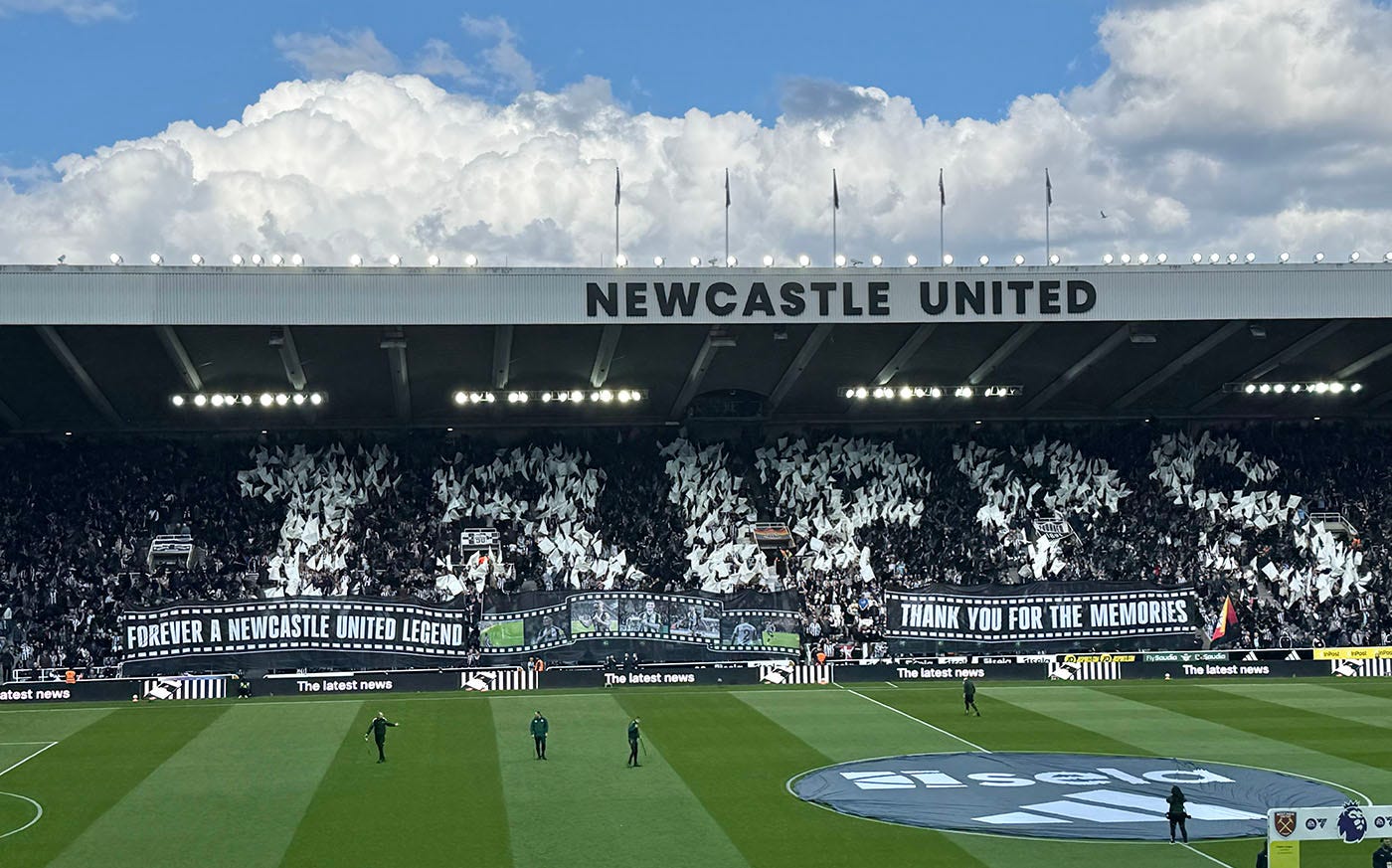
Two big farewells in recent days: On Sunday the last appearance of Kieran Trippier for Newcastle United at St James’s Park – the best right back to play for the club in the modern era and maybe ever, only David Craig3 comes close (maybe a better pure defender but Trippier is an all round world class footballer). He started the post-Ashley journey and gave us a string of golden moments topped by a perfect corner on a sunny March day at Wembley that will never be forgotten. A Newcastle United all-time great, a fine servant of the England national team, we’ve been lucky to have him and he’ll be sorely missed.

Well you’ve really got me this time
There has to be an exceptional reason for me to go to s********d, the last time I went to The Empire Theatre was in 1974 to see Monty Python live. Emmylou Harris’ European Farewell tour qualified as a good reason
I’ve loved Emmylou since Pieces of the Sky. She’s managing her voice a bit more at 79 and rearranging numbers accordingly but the remarkable power and nuance is still there which left the house PA struggling. I saw her at the Barbican 12 years ago doing Wrecking Ball where the sound and acoustics were better. That was more downbeat but still an uplifting moment at an awkward time of personal loss. Her music does that. Finer detail of sound aside, Monday’s 14 Grammy career spanning 24 song set raced along: an excellent band, the music of pain and loss, plus a few “almost optimistic”, and a subtle dig at Trump. Is there a sadder song on the planet than Red Dirt Girl? OK, maybe, but I can’t think of one just now (if you’ve not heard get some tissues and listen below). A special artist for me for more than half a century who showed me that there was more to country music then rhinestone and big hats.
That’s all for this week, thanks for reading.
Till next time, take care.
John
Craig was right back in the 1968-69 team that won the Fairs Cup. Being from Northern Ireland he didn’t travel to world cups or have much of an international profile, however he would have walked into the England team.